

ASMR A - Z: Clay
From creation to death, how clay carries the full cycle of life across African cosmologies

Clay: why so many African creation stories begin with earth
Have you ever wondered why so many African creation stories begin with clay?
Clay is one of the simplest materials in the world, and one of the most profound. It is earth mixed with water. It sits beneath people’s feet, grows their food, stains their hands, and can be shaped into vessels, homes, sculptures, shrines, and tools. It yields easily to touch, yet once fired, it can outlast generations. Across African cosmologies, clay becomes more than a material. It becomes a way of thinking about life itself.
That is why it appears so often in stories about beginnings
Clay in creation stories
Across very different African traditions, human beings are described as being formed from earth:
In a Yorùbá creation account, Ọbatálá moulds the first human beings from clay.
Among the Shilluk of the Sudan and South Sudan region, Juok is said to have made people from clay, with different skin tones linked to the colours of the earth itself.
In one Efé account from Central Africa, the creator Baatsi forms the first human out of clay, skin, and blood.
These traditions come from different places, languages, and spiritual worlds, yet they return to a strikingly similar image: the human body as something shaped from the ground.
That image is powerful because it feels true to lived experience. Clay is not an abstract substance. It is part of everyday life. People walk on it, farm through it, build with it, and make vessels from it. So when a culture asks what human beings are made of, clay offers an answer that is both symbolic and immediate. It explains origin through a material people already know intimately. Human beings come from the earth because they are already in relationship with it.
There is also something especially fitting about clay itself. It is malleable, but not formless. It can be worked, pressed, smoothed, and remade. It responds to touch. In that sense, it becomes an ideal material for imagining creation, because it captures the sense that human life is shaped rather than simply produced. To be made from clay is to be made carefully. It suggests intention, touch, and process.
The pot as womb
That same logic carries into the symbolism of the pot. Across parts of Africa, clay vessels are closely associated with fertility, womanhood, and the capacity to carry life. The pot is not only an object of domestic use. It can also stand in for the womb.
Among the Bemba, a woman about to marry may be given a clay pot by her father’s sister, and the vessel is understood in relation to the hope of future pregnancies.
A similar symbolism appears in Shona marriage practice, where a paternal aunt presents a bride with a clay pot filled with water, itself closely tied to fertility and generative power.
In both cases, the vessel matters because it holds, carries, and sustains. It remains a living metaphor for how life continues.
Pottery as knowledge and discipline
Across the continent, pottery traditions reflect a deep understanding of material, process, and environment.
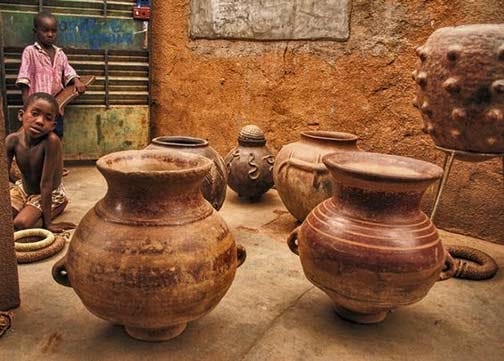
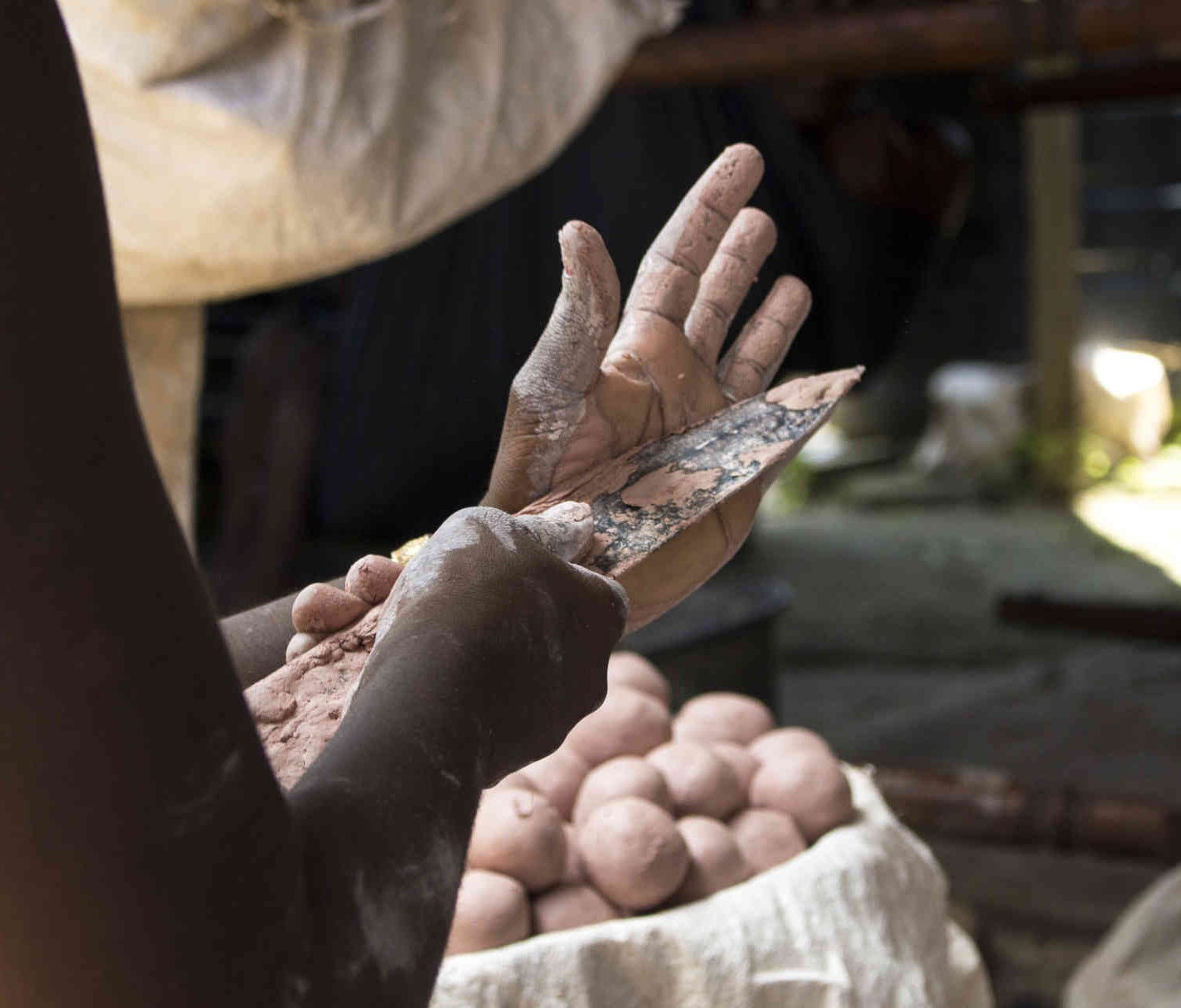
African pottery is often hand-built rather than wheel-thrown, using coiling and moulding techniques passed down through generations. Terracotta clay is commonly used and fired in open conditions, producing vessels that are both durable and functional. These objects are not purely decorative. They are made for cooking, storage, brewing, architecture, and ritual use.
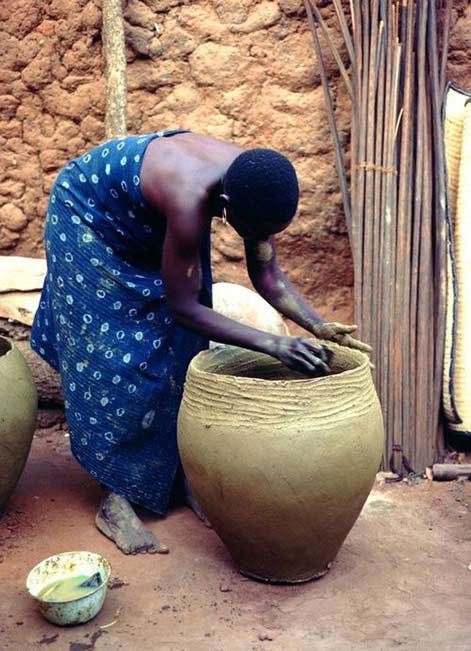
Knowledge of clay itself is highly developed. In some regions, potters source clay from riverbanks during dry seasons, storing it for later use. In others, termite mound clay is used because of its natural binding properties, strengthened by termite secretions. The process of digging, drying, soaking, and shaping clay follows seasonal rhythms and environmental awareness.
At the same time, pottery is often surrounded by social and ritual structures.
In many communities, pottery is associated with women, though this varies by region. Among the Bamana, for example, pottery knowledge may be passed through specific lineages, sometimes with initiation processes tied to the transmission of skill.
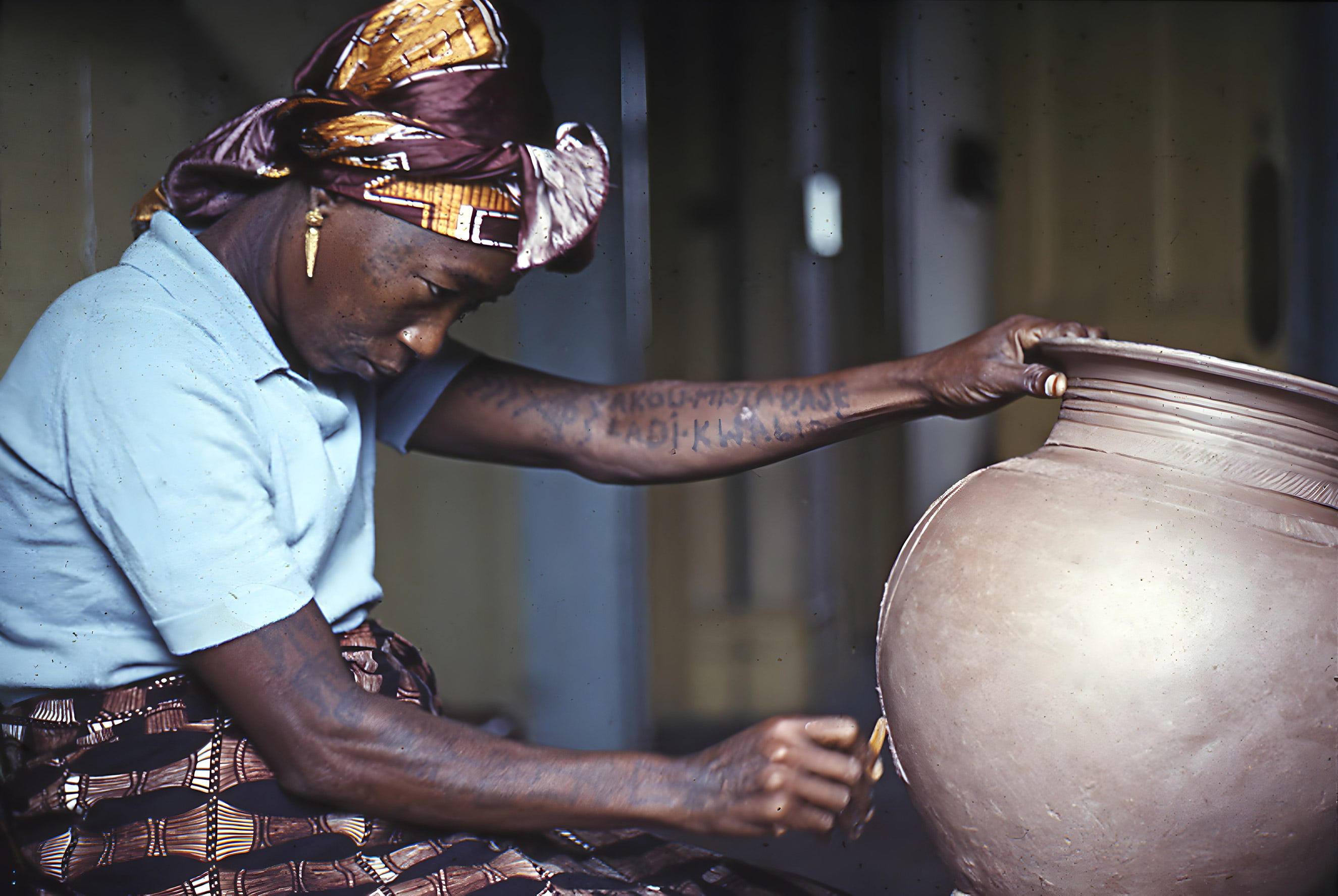
Among Chewa potters, sexual abstinence may be observed during key stages of production, while in other contexts menstruation can restrict access to clay or participation in pottery-making.
These practices differ across cultures, but they point to a shared idea: claywork is not neutral. It carries weight. It is often treated as a form of controlled power, shaped through discipline, restriction, and inherited knowledge.
When the pot breaks
That same symbolic power appears again in death. Clay is not only there at the beginning of life. It also returns at its ending.
Clay also appears at the end of life.
In some traditions, when a woman dies, one of her pots may be broken and buried with her. Among the Chewa, this act can mark the conclusion of her life.
Among the Gurunsi of Burkina Faso and Ghana, the broken pot can stand as an image of the lifeless body. The symbolism is direct. A vessel that once held water, grain, or nourishment is now shattered. It can no longer contain what it once carried. In that moment, clay becomes a language for mortality.
Clay as a home for the spirit
And yet clay does not only signify endings in the sense of disappearance. In many African contexts, vessels can also hold presence. Clay pots are sometimes treated as containers of memory, relation, and spirit.
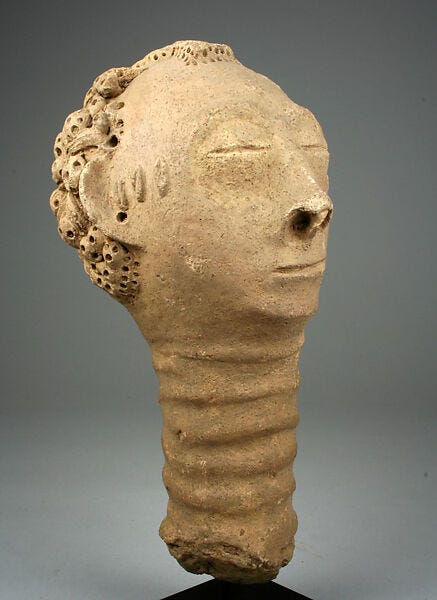
Akan memorial terracotta heads (often called nsodie), are placed in funerary groves, where they serve as points of connection between the living and the dead.
That same principle continues across the diaspora. In Haitian Vodou, the govi, a red clay jar, serves as a vessel through which the dead may remain active in community life. It can be fed with offerings and approached as a site of guidance, protection, and continued presence. The body may be gone, but clay still offers a place where relation can be held.
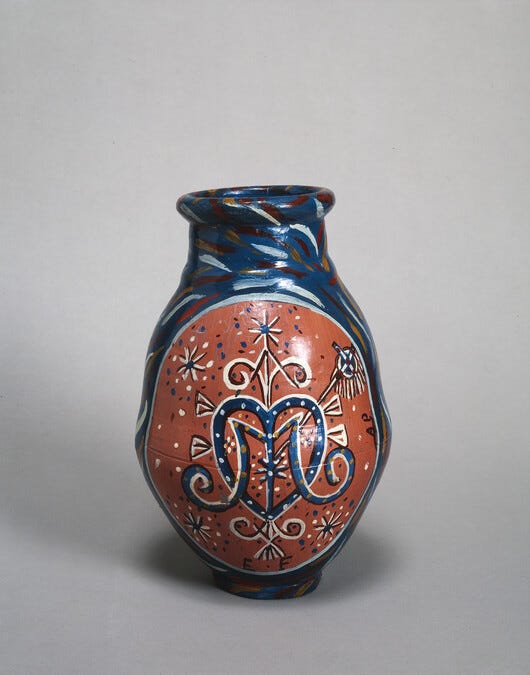
Here, clay becomes a container not just of substance, but of relationship.
White clay and sacred marking
Across many African ritual contexts, white clay is used to mark bodies, masks, and sacred objects.
It often signals transition, purification, or proximity to the spiritual realm. In many cosmologies, white is associated with coolness, clarity, and the ancestral domain. When white clay is applied, it marks a shift in status. It indicates that something has moved into a different register of meaning.
This continues in diasporic traditions. Among the Saramaka of Suriname, white clay (pemba dote) is used to mark sacred objects within ritual practice.
If you enjoyed this, you may also like our ASMR A–Z essay on Clay, where we explore how earth, water, pottery, fertility, and ritual come together across African spiritual traditions.
You can read more like this across our ASMR A–Z series, where we break down key ideas in African mythology, spirituality, and religion from A to Z.
Why clay keeps returning
What makes all of this so compelling is that clay moves across the whole cycle of life. It appears in stories of creation, in marriage, in fertility, in craft, in ritual restriction, in funerary practice, and in relations with the dead. It is there when life is imagined, when life is sustained, and when life is mourned. Few materials carry that much symbolic range while remaining so ordinary and so close to the ground.
So perhaps clay keeps returning because it reminds us that human life is never separate from the ground beneath us. We are shaped by land, by hands, by memory, by spirit, and by everything that continues to hold us long after we first begin.
Sources & Further Reading:
Asante, M. K., & Mazama, A. (eds.). (2009). Encyclopedia of African Religion. SAGE Publications. (Internet Archive)
Jacobson-Widding, A., & van Beek, W. (eds.). (1990). The Creative Communion: African Folk Models of Fertility and the Regeneration of Life. Almqvist & Wiksell International. (Internet Archive)
Frank, B. (1998). Mande Potters and Leatherworkers: Art and Heritage in West Africa. Smithsonian Institution Press. (Internet Archive)
Barbour, J., & Wandiba, S. (1989). Kenyan Pots and Potters. Oxford University Press. (Internet Archive)
Encyclopaedia Britannica. “Govi” (Vodou). (Encyclopedia Britannica)
The Metropolitan Museum of Art. Akan terracotta memorial heads (nsodie) and their placement in asensie memorial groves. (metmuseum.org)
I love this. I'm a sculptor working in clay and composites inspired by earthen building and indigenous ritual practices - how the hands that build a place contribute to its spirit. This made me think much more about clay, and soil, in terms of how they represent us as beings, sacred anatomy, and what practices we honor ourselves with. Looking forward to learning more from you, thank you for taking the time and including references!