


When many people think about African masks, they imagine carved wooden faces sitting quietly behind museum glass. But across the continent, masks were not created to be still. They were made to be worn, danced and activated in ceremony.
They appeared with music, movement, costume, rhythm, and community around them. A mask was often only one part of a much larger masquerade, where the human body became the vessel for something more powerful than the individual beneath it.
That is what makes African masking traditions so fascinating. A mask can be art, yes, but it can also represent authority, protection, spirituality, social order, ancestry, and performance all at once. How wonderful is that!
The Grebo “Second Face”
One of the most striking examples comes from the Kru-speaking region of south-eastern Liberia and neighbouring Côte d’Ivoire: the Grebo “Second Face” mask.
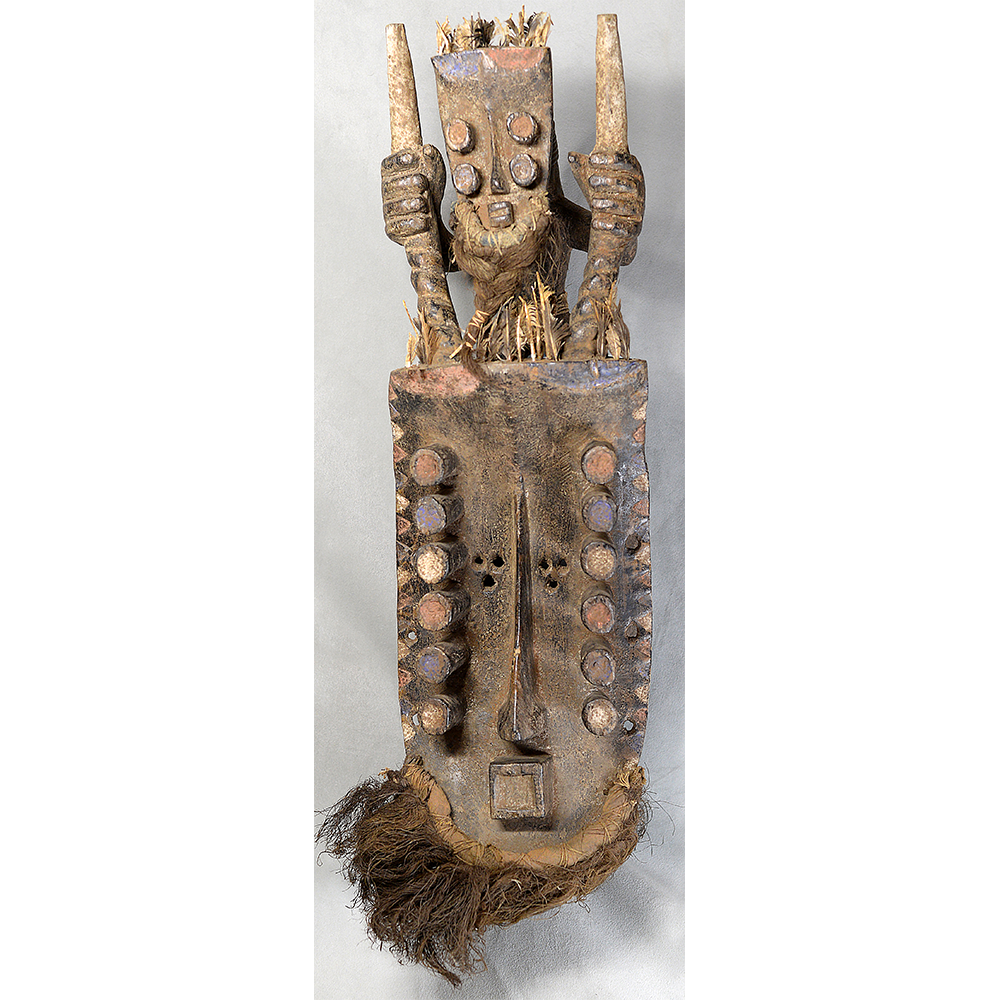
They are often tall and plank-like, with sharp geometric forms and projecting tubular eyes that push out from the surface. Some have two eyes. Others have several, multiplying the gaze and giving the mask an intense, watchful presence beyond that of an ordinary human face.
Why “Second Face”?
These masks are sometimes described as ‘Second Face’ masks because they create another presence layered over the human body. Once worn, the ordinary face disappears beneath a new public identity shaped by the masquerade.
The wearer becomes associated with what the mask represents: vigilance, authority, protection, ancestral force, or warrior power. People respond not to the individual beneath the wood, but to the figure that has entered the public space.
Eyes that see beyond the ordinary
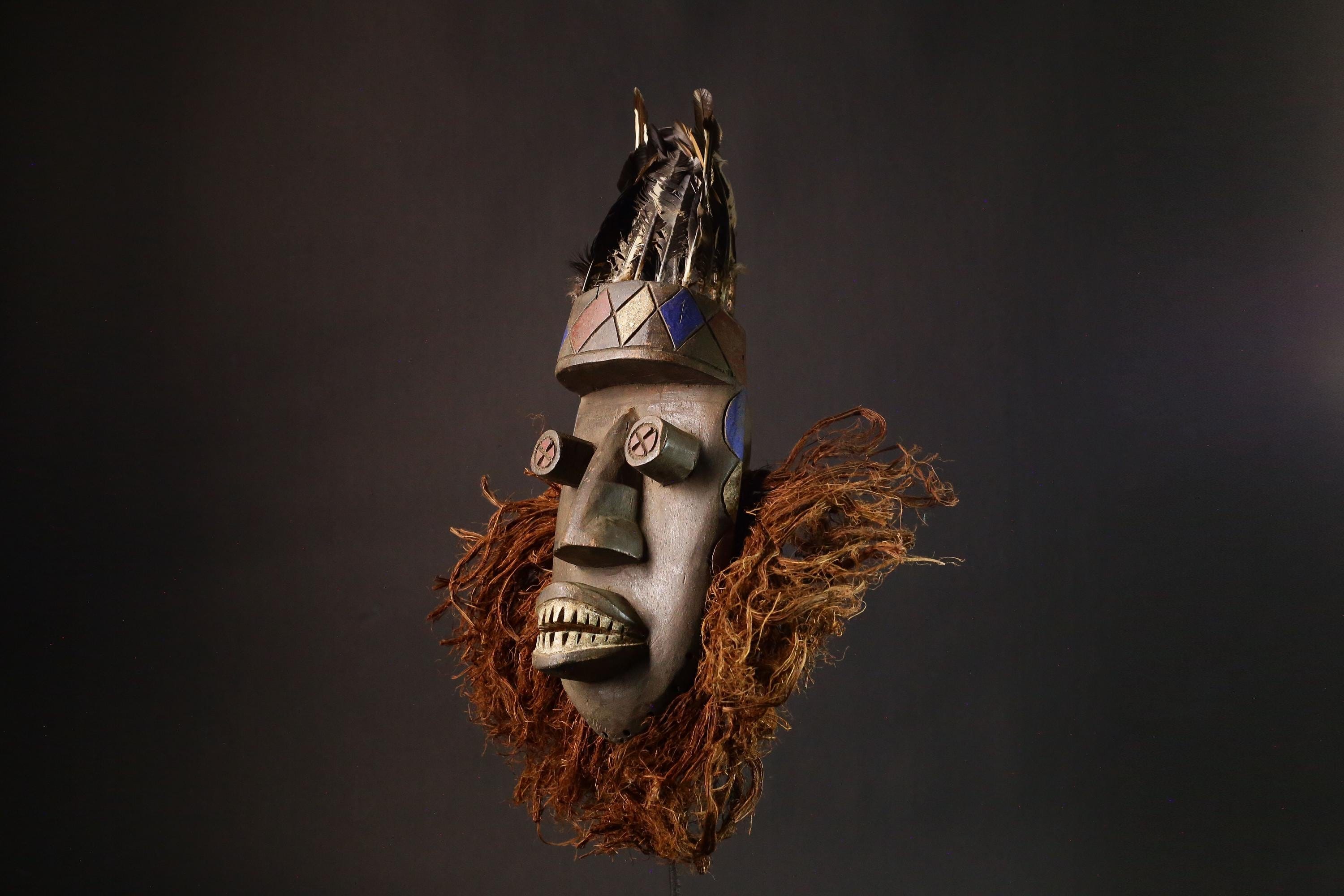
The protruding eyes are one of the most recognisable features of Grebo masks. They can suggest heightened sight, watchfulness, spiritual awareness, or intimidation. With multiple eyes, the mask seems able to see what ordinary people cannot. It looks forward, outward, and beyond.
This makes sense when we consider the mask’s links to warrior societies and conflict. A warrior must be alert. A guardian must see danger before it arrives. A masquerade figure connected to protection must appear impossible to surprise.


A mask of warriors and funerals
Grebo masks like these are often associated with warrior societies. Historical accounts describe them being danced in preparation for war and at funerals for warriors. In this context, the mask carried several meanings at once:
Intimidate enemies.
Honour the dead.
Mark status.
Help protect the community spiritually.
Remind people that courage, defence, and collective strength were not just individual qualities, but communal responsibilities.
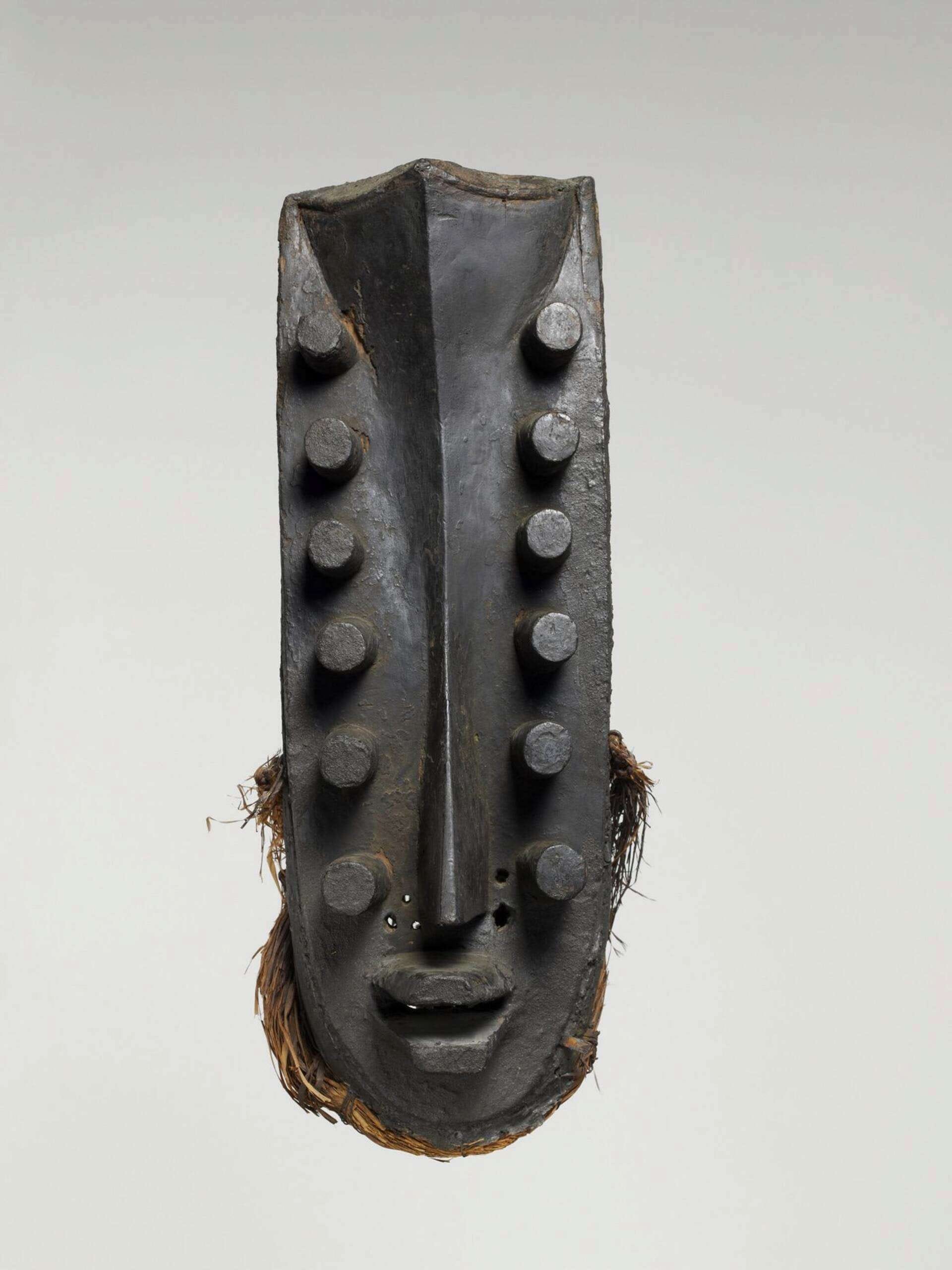
This is why the mask’s shield-like shape feels so significant. The long rectangular face almost reads as armour.
The figure above the face
Some Grebo masks, like the one below, include a carved human figure standing above the main face. This figure may represent an ancestral warrior, guardian, or powerful masquerade persona. The staffs or clubs held in the hands strengthen the themes of defence, authority, and conflict. Together, they create an image of protection and power.
What museums cannot fully show
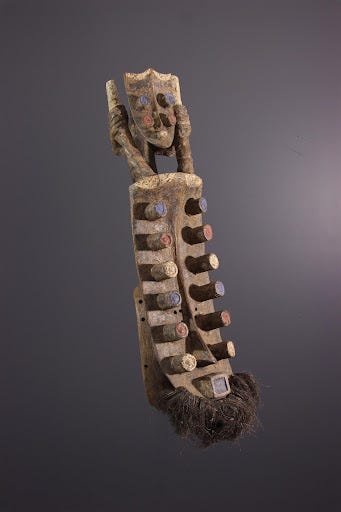
When we see a Grebo mask in a museum, we are usually seeing only one part of the story. We are not seeing the full costume, we can’t hear the beat of the drums, we are not experiencing the performer move through a crowd, or feeling the tension of the ceremony or the atmosphere of a funeral, initiation, or warrior gathering.
That is why we have to imagine these objects in motion and understanding the context behind these masks helps us to do just that.
Further Reading
Mario Meneghini, The Grebo Mask, African Arts (1974)
William Siegmann, Rock of the Ancestors: Liberian Art and Material Culture
Christopher D. Roy, Land of the Flying Masks
Musée du quai Branly – Grebo and Kru Masks
The Metropolitan Museum of Art – African masks collection