

Why African Traditional Religions were (and continue to be) so misunderstood
How colonial language distorted African spiritual systems, and why we need to understand them on their own terms

Why African Traditional Religions were (and continue to be) so misunderstood
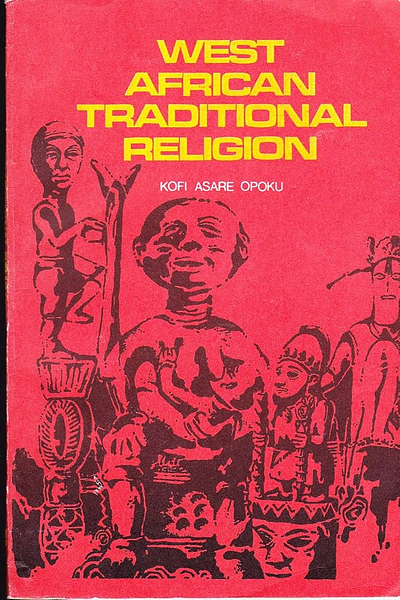
We recently read a chapter from Kofi Asare Opoku’s West African Traditional Religion, and it put into words something we have felt for a long time and often say: so much of what people think they know about African traditional religions has been shaped by people who were not trying to understand them on their own terms.
Unfortunately, we could only find the first chapter ‘African Traditional Religion: A General Introduction’. The full book, like so many important texts on African religions, is either very expensive, difficult to access, or almost impossible to find without digging. So we’ve uploaded the chapter we did manage to find here, because work like this deserves to be read and shared. You can find it at the end of this article.
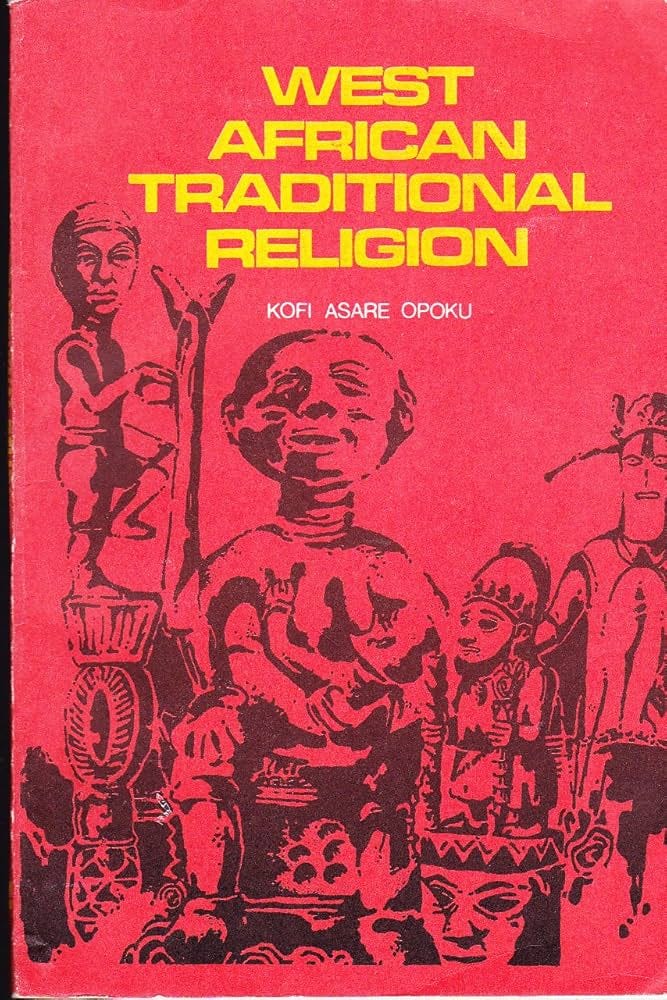
The chapter made us think about how religion gets described, who gets to do the describing, and what happens when entire systems of thought are filtered through outsiders’ assumptions.
It also made us think about how often African spiritual systems are described through words like “pagan”, “animist”, “fetish”, “ancestor worship”, or “polytheism” words that often carry long histories of judgement.
And once you start looking closely, the question becomes: are these words actually explaining African traditional religions, or are they revealing the assumptions of the people who used them?
Religion as Everyday Life
One of Opoku’s central points is that religion, in many traditional African societies, is not separate from daily life. It is not something reserved only for a shrine, a ceremony, or a particular day of worship.
It is woven into farming, fishing, hunting, eating, drinking, travelling, birth, death, family, society, morality, and the way people understand both this world and the next.
That point matters because many people are used to thinking of religion as something that happens in a specific building, under a specific doctrine, with a specific text.
But in many African contexts, religion is not an isolated compartment of life. It is the framework through which life itself is understood.
It shapes how people relate to land, ancestors, community, the natural world, the dead, the unborn, and the divine.
The Problem with ‘Outsiders’ Telling the Story
A lot of early writing on African religions came from European explorers, missionaries, and anthropologists who viewed them through Christian, colonial, and European assumptions.
The people who practised these traditions often had their own explanations ignored, making it easier for outsiders to distort or dismiss what they did not understand.
Missionaries often dismissed African religions as superstition, while other writers used them to justify Europe’s so-called “civilising mission” and present African thought as inferior.
Some writers even denied that African societies had religion at all. Others could not accept that sophisticated religious ideas, such as belief in a Supreme Being, could have originated within Africa. If they encountered ideas that felt familiar to them, they often assumed those ideas must have been borrowed from Europe or the Middle East.
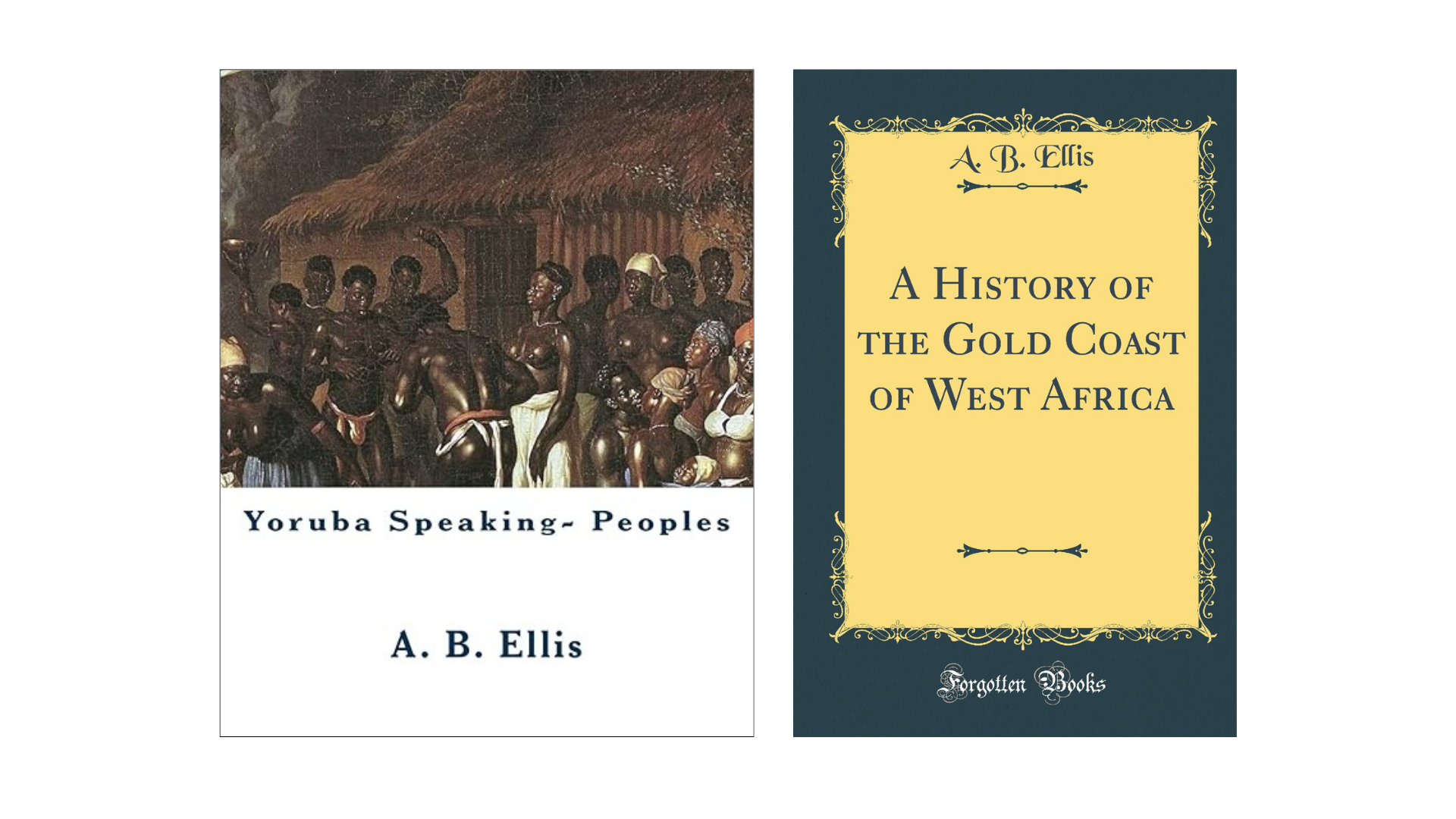
Opoku gives the example of A. B. Ellis, who argued that the Akan Supreme Being, Onyame, was a “loan-god” introduced by missionaries. That kind of thinking says a lot. It suggests that African societies could not possibly have developed deep theological ideas of their own.
This is why the issue is not just bad terminology. It is also about authority. Who gets to explain a tradition? Who gets believed? And what happens when the people closest to a tradition are treated as unreliable witnesses to their own culture?
When Religion Is Judged by the Wrong Standard
Another problem Opoku identifies is the tendency to judge African traditional religion by whether it resembled Christianity.
Many writers looked for written doctrines and religious systems that resembled Christianity, and when they did not find religion in that form, they assumed it had no depth.
But that misses the point. Religion is not only what is written down. It is also ritual, ethics, practice, community, memory, obligation, and how people live in relation to the spiritual world.
One quote that really stayed with us is from Mbonu Ojike, a Nigerian nationalist, writer, and cultural thinker known for defending African identity against colonial ideas of inferiority:
“If religion consists in deifying one character and crusading around the world to make him acceptable to all mankind, then the African has no religion. But if religion means doing, rather than talking, then the African has a religion.”
That is such a useful shift. Instead of asking, “Where is the doctrine?” we might ask: How do people honour the sacred? How do they remember the dead? How do they understand wrongdoing, healing, protection, fertility, justice, destiny, and community?
Those questions bring us much closer to the actual life of the religion.
This brings us to the words themselves: “animism”, “paganism”, “fetishism”, “ancestor worship”, and “polytheism”, words often used for African traditional religions, but not always in accurate or fair ways.
“Animism”
The term was popularised by E. B. Tylor and comes from the Latin anima, meaning breath, soul, or spirit. Tylor used it to describe the belief that spirits or souls exist in humans, animals, objects, and nature.
When this is applied to African traditional religions, it can be misleading. These traditions do not usually teach that every object automatically has a soul. Instead, certain objects may act as vessels, dwelling places, or points of contact for spiritual power.
That distinction is important. A river may be sacred, but that does not mean people are simply worshipping water. A tree may be associated with a spirit, but that does not mean the tree itself is the ultimate object of worship. A ritual object may be powerful, but that does not mean the whole religion is object worship.
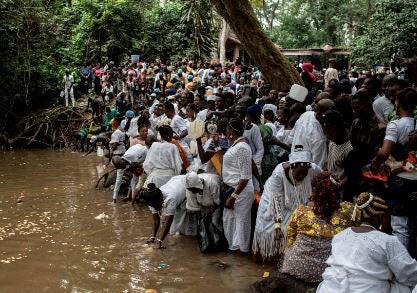
Often, the visible thing is a point of contact with an invisible reality. In many African worldviews, the spiritual and material are not completely separate. They interact. The physical world carries spiritual significance. Nature is not empty matter. It can be inhabited, charged, protected, respected, feared, or approached carefully.
“Paganism”
Originally, pagan simply meant someone who was not Jewish, Christian, or Muslim. But in relation to Africa, it became derogatory. It was used to suggest that African traditions were not real religions, or that they had no serious spiritual value.
Calling African traditional religions “paganism” diminishes them entirely. It also places Christianity, Islam, and Judaism as the standards by which all other religions are measured. Anything outside that frame is treated as lesser, rather than different.
“Fetishism”
The word comes from the Portuguese fetico, and originally referred to works of art or man-made religious objects. But over time, it became shorthand for African religion itself, as if entire spiritual systems could be reduced to charms and objects.
And there was a clear double standard. Similar objects elsewhere were called talismans, amulets, or mascots, while African objects were labelled “fetishes”.
Opoku also points out that African languages themselves often make distinctions that early European writers ignored. He gives the example of the Akan, people primarily found in Ghana and Côte d’Ivoire, whose traditional religious worldview includes belief in a Supreme Being, divinities, ancestors, spirits, ritual objects, and the spiritual significance of the natural world.
In Akan traditional religion, suman refers to a man-made religious object or charm, while obosom refers to a deity or lesser spirit. These are not interchangeable categories. A suman may be made, empowered, carried, kept, or used for protection, while an obosom belongs to a different spiritual category altogether.
In other words, Akan thought already had its own vocabulary for distinguishing between ritual objects and divine beings. When colonial-era writers collapsed both into the word “fetish”, they erased that nuance and made the religion appear far simpler than it actually was.
“Ancestor Worship”
Ancestors are deeply important in many African traditional religions, but “ancestor worship” is an oversimplification. It takes one part of the religion and makes it seem like the whole system.
Across the continent and the diaspora, you do find ancestral veneration, but that is not the same as simply “worshipping ancestors”. Ancestral veneration is about respect, remembrance, lineage, and responsibility. It recognises that you come from people, that the dead still matter, and that family does not end at the grave.
Practices like libation, offerings of food, remembrance, and ritual acknowledgement are religious acts, but they are not always worship in the strict sense. Often, they express hospitality towards the dead, reverence for those who came before, and belief in the ongoing relationship between the living and the departed.
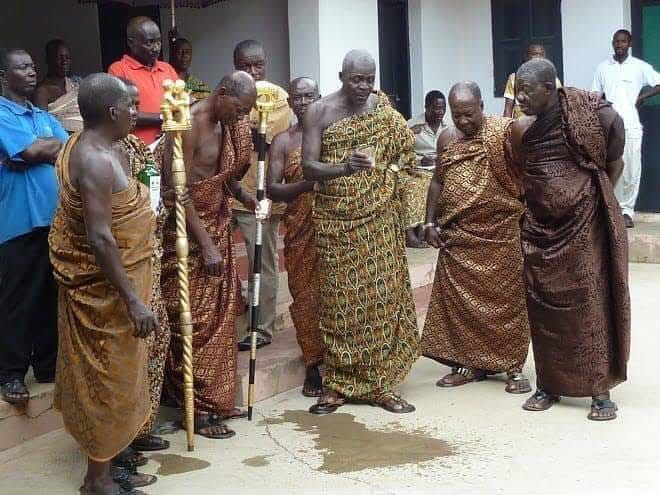
You probably practise this kind of remembrance in your own life, even if you do not call it ancestral veneration.
Maybe you visit graves with flowers, keep photographs and funeral programmes, tell stories about loved ones who have passed, name children after grandparents, or carry forward family recipes, songs, sayings, and memories.
Your grandparents are ancestors just as much as your great-great-great-grandparents. And one day, you will be an ancestor too.
“Polytheism”
Polytheism is another complicated label. On the surface, it might seem straightforward. Many African traditional religions recognise multiple divinities, spirits, or supernatural beings. But calling them simply “polytheistic” misses something crucial.
The question is not only whether many divine beings exist. The question is: what is their relationship to the Supreme Being?
In many African traditional religions, there is belief in a Supreme Being who is Creator, source of power, final authority, and the one who has power over life and death. This Supreme Being is not just one god among many. Opoku argues that God stands outside the pantheon and is the source from which other divinities derive their power.
That is why he says African traditional religions cannot simply be called polytheistic because it recognises many divinities.
A tradition can recognise divinities, ancestors, spirits, sacred forces, and ritual objects while still holding a clear idea of a Supreme Being.
Some Shared Features Across African Traditional Religions
It is important not to suggest that all African religions are identical. Africa is far too vast for that, with thousands of peoples, languages, histories, and systems of thought.
Still, there are some shared features that appear across many African traditional religions:
The first is belief in God, known by different local names. God is understood as Creator, source of life, source of power, final authority, and moral judge.
The second is the importance of ancestors. Ancestors are treated with reverence and awe because they remain part of the community. They are not simply gone, they continue to matter.
The third is the presence of lesser deities or supernatural beings. These beings may be associated with particular forces, places, needs, or areas of life. They may be called upon in times of difficulty, danger, illness, uncertainty, or need.
The fourth is the sacredness of nature. Rivers, mountains, rocks, trees, animals, and plants may be associated with spiritual power. But again, the point is not that people are worshipping the object itself. The object may be understood as a dwelling place, emblem, vessel, or point of relationship.
The fifth is the recognition of other mystical powers that can help or harm human beings. This includes ideas around magic, sorcery, protection, charms, amulets, and talismans.
So already, we can see how inadequate the old labels are. African traditional religion is not one thing. It is a layered worldview involving God, divinities, ancestors, spirits, nature, human beings, community, morality, and the unseen world.
The Unseen Is Part of Reality
One of the most important ideas in the chapter is that what cannot be seen is still understood as part of reality.
In many African worldviews, reality includes both the visible and invisible. The spiritual is not separate from the material in a neat Western binary. It is part of the same reality, and often understood as more powerful than what can be seen.
This affects how people understand nature, the human person, society, and death:
A person is understood as both physical and spiritual.
A community extends beyond those who are currently alive, holding together the living, the dead, and those yet to be born.
Nature is not treated as empty background or raw material, but as something that can carry presence, memory, power, and responsibility.
This is such an important point because it helps explain why African traditional religions often feel so embedded in everyday life. The sacred is not separate from everyday life; it is already present in it.
The Living, the Dead, and the Unborn
The section on human beings and society is one of the richest parts of the chapter.
In many African societies, a human being is understood as both physical and spiritual. The body dies, but the spiritual part continues. Death is not seen as the end of life, but as a continuation of it
This is why the dead remain part of the community. There is the community of the living, but there is also the community of the dead, and both are connected. The living remember, honour, and seek guidance from those who came before, while the dead remain part of the family’s spiritual and moral world.
This changes how we think about ancestry. Ancestry is not only about the past; it is about continuity. It connects those who came before, those who are here now, and those still to come.
It also helps explain why rites of passage matter so much. Birth, puberty, marriage, parenthood, death, and the afterlife are not seen as random life events, but as transitions within a larger cycle. Ritual helps people move through those stages with care, meaning, and connection.
Life is not imagined as a straight line that ends at death. It is a cycle of movement, relationship, and regeneration.
Personhood and Community
In many African societies, belonging to a community is central to what it means to be human. This does not mean the individual does not matter. It means a person is understood through relationship.
You are not only yourself. You are someone’s child, someone’s descendant, someone’s future ancestor, someone’s neighbour, someone’s responsibility.
Society is often built around obligation, participation, and interdependence. Rights and responsibilities are not always treated as separate things; they are connected through how people show up for one another.
This is where religion and society become deeply linked. Religious life helps teach people how to live with others, honour their obligations, respect elders, relate to ancestors, maintain harmony, and move through life’s major transitions with care.
Religion as the Cement of Society
Religion also works as something that binds society together. It connects people to unseen powers, yes, but it also connects them to one another. It gives structure, support, moral guidance, and a shared sense of responsibility.
In many African societies, religion was not always taught through formal lessons in the way we might imagine today. People learned it by growing up inside it. They absorbed it through ceremonies, festivals, names, proverbs, taboos, family practices, rites of passage, songs, stories, and everyday behaviour.
This is a helpful way to understand religion as culture. It is not always taught through a textbook. Sometimes it is learned through repetition, participation, memory, and community.
You learn by watching. You learn by doing. You learn by being part of the life around you.
Sacred Kingship and Spiritual Authority
Opoku also explores how chiefs and kings often have both political and religious roles.
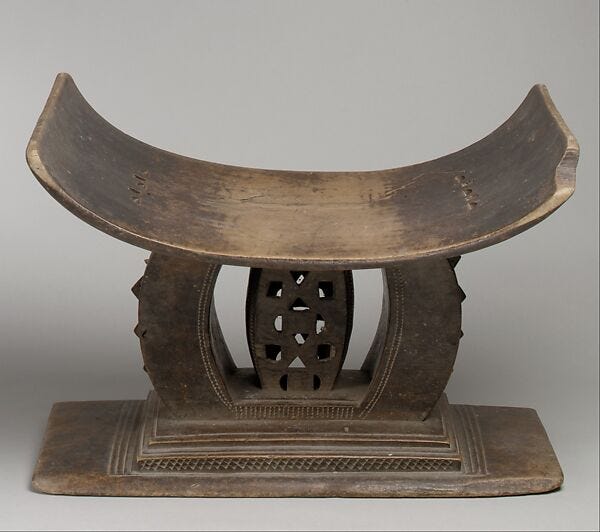
Among the Akan, for example, a chief derives authority from the ancestral stool. The stool is not just a seat. It is a sacred link between the living community and the ancestors. The chief represents the people before the ancestors, offers food and drink during festivals, performs sacrifices, and carries ritual responsibility in times of crisis or misfortune. This means chieftaincy is not only political. It is also spiritual.
Opoku gives the example of the Ooni of Ife among the Yorùbá. The Ooni is not only a ruler, but a sacred figure whose office is connected to Orisa-nla and Olódùmarè. Historically, the office was so sacred that the Ooni was sometimes regarded as an orisa. This tells us something important: in many African contexts, leadership, ritual, ancestry, and spiritual order are deeply connected.
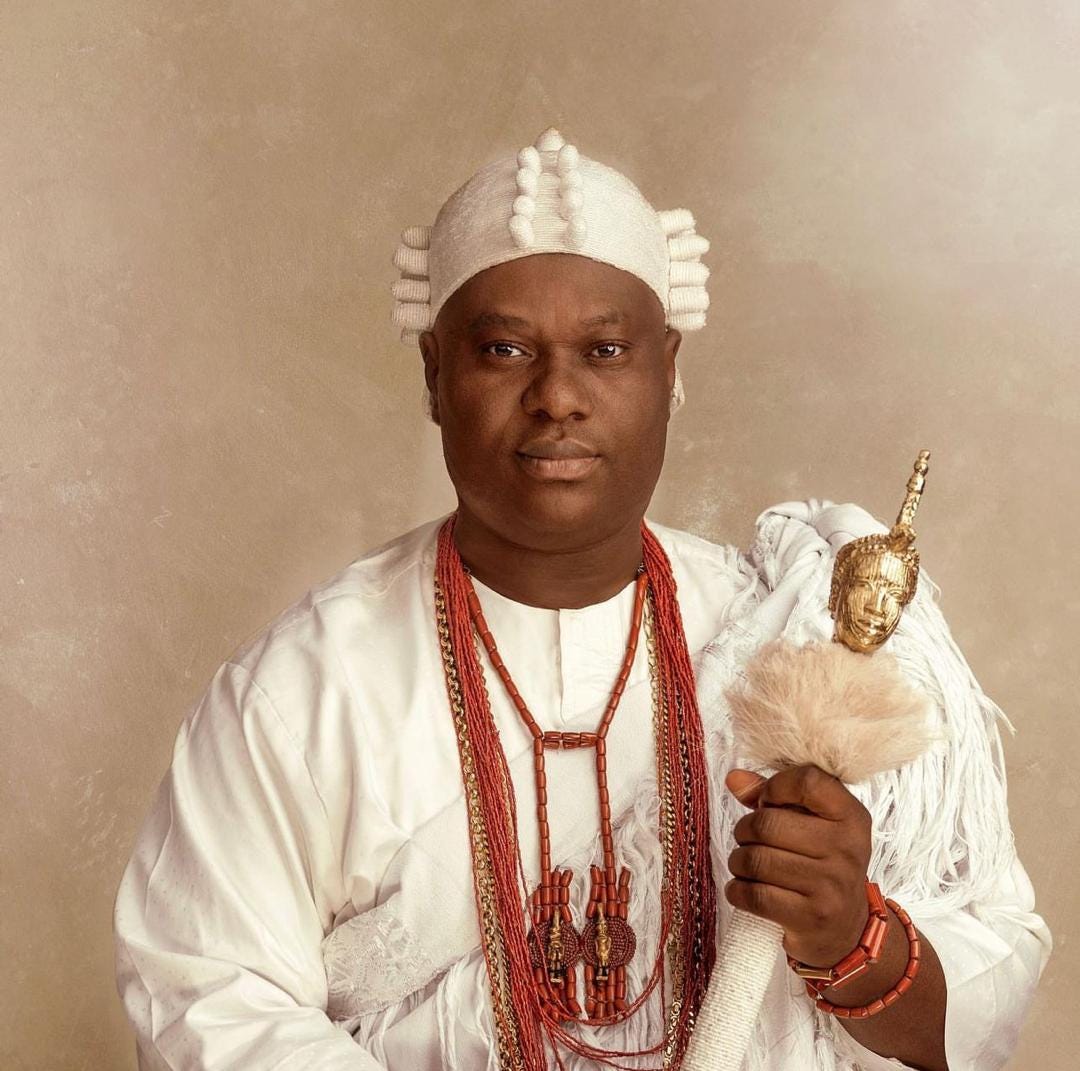
To describe a king or chief as only a political leader can miss the sacred responsibilities attached to that office.
Why Specificity Matters
One of Opoku’s most useful recommendations is that we should stop forcing African religions into misleading general labels and call them by their names. When speaking broadly, “African Traditional Religion” can be useful. But when we are speaking specifically, we should name the tradition or community we mean.
That might be Ìṣẹ̀ṣe, Ifá-orisa, Akom, Vodou, Candomblé, Waaqeffanna, or another system entirely.
The point is not that all of these are the same. Africa is not one vague spiritual category. It is home to many peoples, languages, histories, cosmologies, and religious worlds.
At the same time, African traditional religions are part of humanity’s wider religious heritage. They ask universal questions: Where did we come from? What happens after death? How should we live? What do we owe to the dead? How should we live with nature? What is our relationship to the divine?
Every society asks these questions, but each answers them through its own language, landscape, symbols, rituals, and history.
So why demonise an entire continent just because its answers did not look like yours?
Traditional Does Not Mean Dead
When we say “traditional”, we do not mean dead, primitive, or outdated. Traditional means rooted in indigenous values, inherited practice, and historical memory.
African traditional religions are still practised by millions today. They continue to shape identity, values, family life, art, festivals, ethics, ritual practice, and how people understand the world.
This matters because people often speak about African traditional religions as if they belong only to the past. As if they disappeared once Christianity or Islam arrived. As if they are museum objects rather than living traditions.
But these religions are not simply relics. They are contemporary realities.
They have survived colonialism, missionary pressure, ridicule, distortion, and misnaming. They continue to live in ceremonies, prayers, shrines, songs, divination systems, family obligations, diasporic religions, artistic practice, and everyday ways of seeing the world.
What We Take From Opoku
What we take from Opoku’s chapter is not only a better understanding of African traditional religion, but a better understanding of how misunderstanding works.
Misunderstanding is not always accidental. Sometimes it is produced by bad language. Sometimes it is produced by power. Sometimes it happens when outsiders refuse to listen to the people who practise the traditions they are describing.
Words like “animism”, “paganism”, “fetishism”, “ancestor worship”, and “polytheism” are not always innocent. They can flatten complex systems into caricatures.
They can make African religions seem primitive when they are philosophical.
They can make sacred objects seem like superstition when they are part of a larger spiritual system.
They can make ancestor veneration seem irrational when it is rooted in memory, lineage, and responsibility.
They can make multiple divinities seem like confusion when they may exist within a wider belief in a Supreme Being.
So the main takeaway is this: African traditional religion should not be understood through the language of colonial misunderstanding.
To understand it properly, we have to stop measuring it against European religion and start listening to the traditions themselves.
Read the chapter below and spend some time with Opoku’s words for yourself. And please let us know your thoughts!
This is a brilliant article. THANK YOU. Whenever I write about our African spirituality systems, I just call it African Sacredness.
Regarding animism: Tylor viewed it as inferior, describing it as an early and “primitive” form of religion that came before and was less advanced than later systems like monotheism or organized European religions. His evolutionary model placed animistic beliefs at the lowest level of religious development, labeling them as characteristic of so-called “savages” or “primitive tribes.” Tylor argued that as societies advanced, their religious beliefs supposedly evolved beyond animism to more complex systems.
It is notable that Tylor regards Christianity as monotheism. From a Muslim perspective, however, Christians are seen as worshipping “three gods” (or a “three‑person god”) and have thus departed from pure monotheism in favor of a form of disguised idol‑worship. The traditional Christian language of “one God in three persons—Father, Son, and Holy Spirit”—is often interpreted by Muslims as a de facto claim to three gods, even when Christians deny polytheism. In Islam, the act of ascribing “partners” to God is called shirk, considered the gravest form of unbelief because it transforms the One into a company. Many Muslims, historically and today, bluntly argue that the Trinity is simply polytheism in a more philosophical form: three beings worshipped instead of one.
My last point is that the central principle of African Sacredness is that we live in a world of three. My cine essay on Sinners explores this in detail, illustrating how this connection was disrupted in the African diasporic world.
Thank you once again for sharing your thoughtful reflections. It is clarifying.
not all african religion belive in god