

ASMR A-Z: Cowrie Shells
From currency to divination, how cowrie shells carry value, protection, and spiritual meaning

Cowrie shells: how a small shell came to hold power, value, and meaning
How much power can a small shell hold?
At first glance, cowrie shells seem simple. Smooth, rounded, almost polished to a shine, with a narrow opening running along the underside. They are small enough to sit in the palm of a hand.
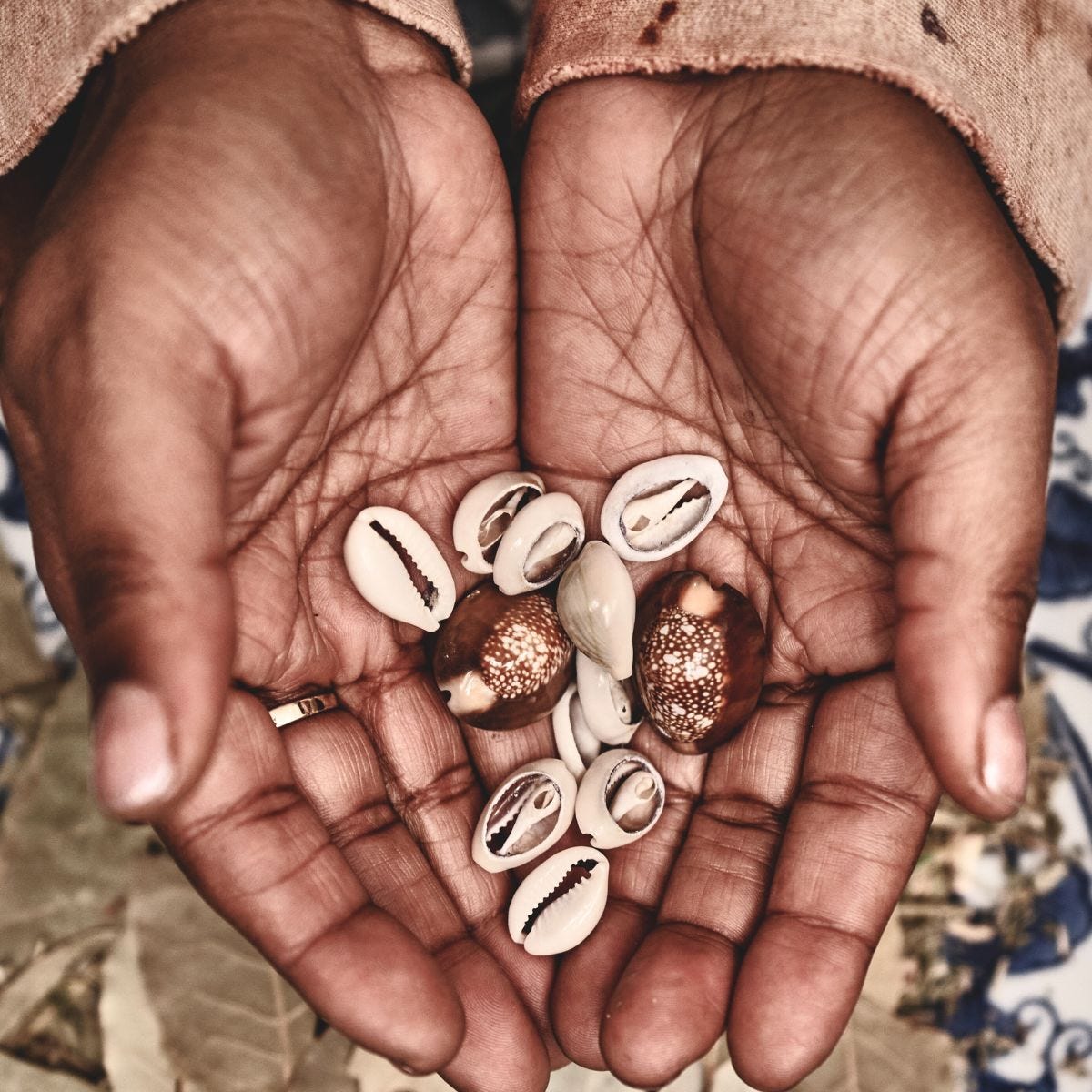
And yet, across African histories and spiritual systems, these shells have carried extraordinary weight.
They have been used as money, worn as protection, placed on the body, embedded into artworks, and cast in rituals as tools of divination and guidance.
To understand why, it helps to begin with where they come from.
From ocean to continent
Cowrie shells are produced by small sea-dwelling molluscs in the family Cypraeidae. They live in warm waters, particularly across the Indian and Pacific Oceans, often around coral reefs. Their shells are naturally smooth and glossy, shaped over time by the living organism that covers and polishes them.
They have existed for millions of years, long before human interaction, and in large numbers. A single cowrie can lay hundreds, sometimes thousands, of eggs in one cycle. Their abundance, durability, and striking appearance made them both accessible and desirable.
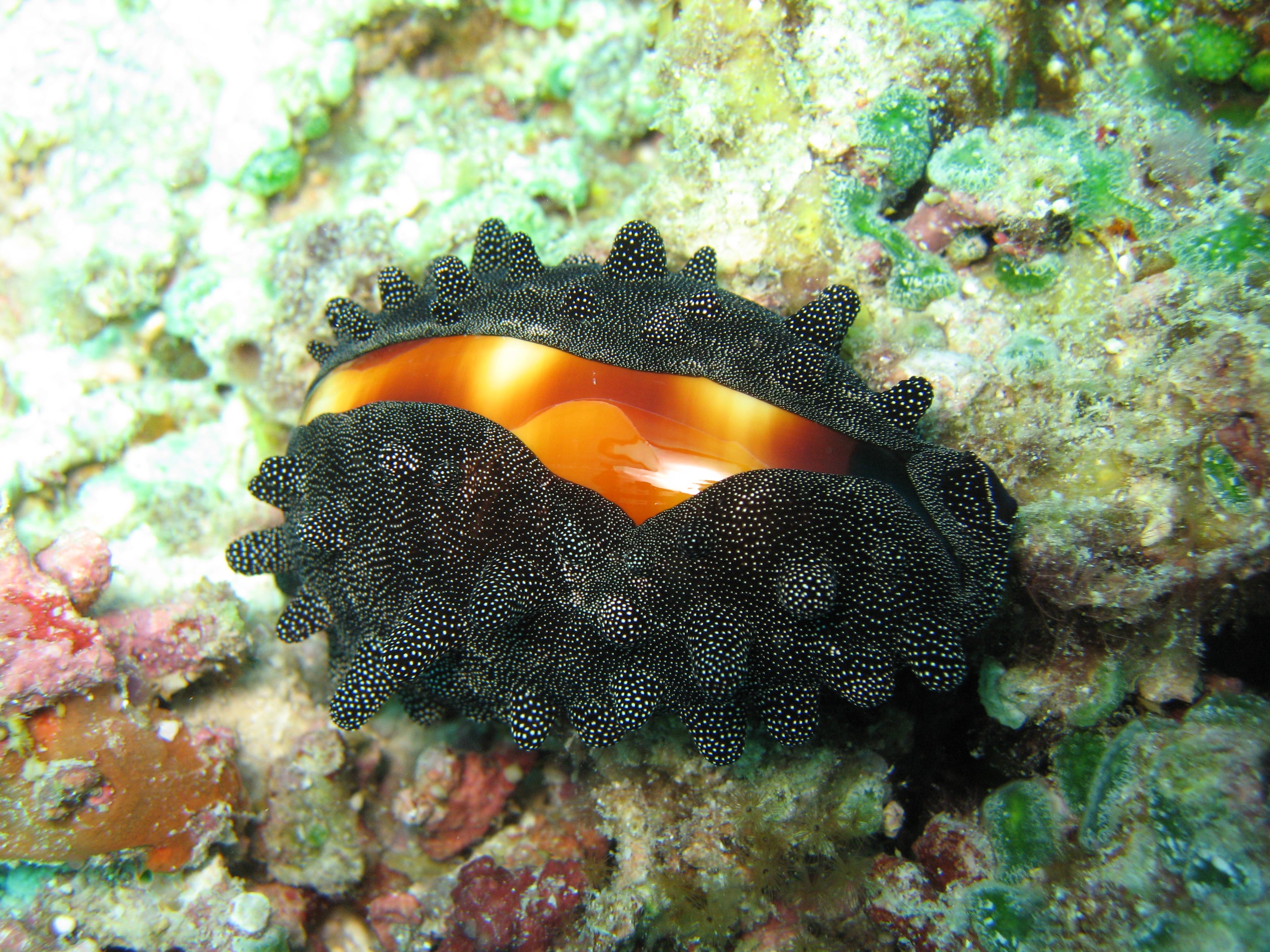
From these ocean environments, cowries began to travel.
Through long-distance trade networks, particularly from regions like the Maldives, vast quantities of cowrie shells moved across the Indian Ocean and into Africa. By the time they reached the Guinea Coast, they had become part of everyday life.
Cowries as currency
Across parts of West Africa, cowrie shells became a widely used form of currency.
Their value was not arbitrary. They were small, durable, difficult to counterfeit, and easy to transport. Unlike perishable goods, they could hold value over time. Their relative scarcity in certain regions also made them desirable.
By around the 14th century, cowries were being used in large-scale trade systems, sometimes alongside gold. European traders later entered this system, importing cowries in bulk, recognising their established role in local economies.
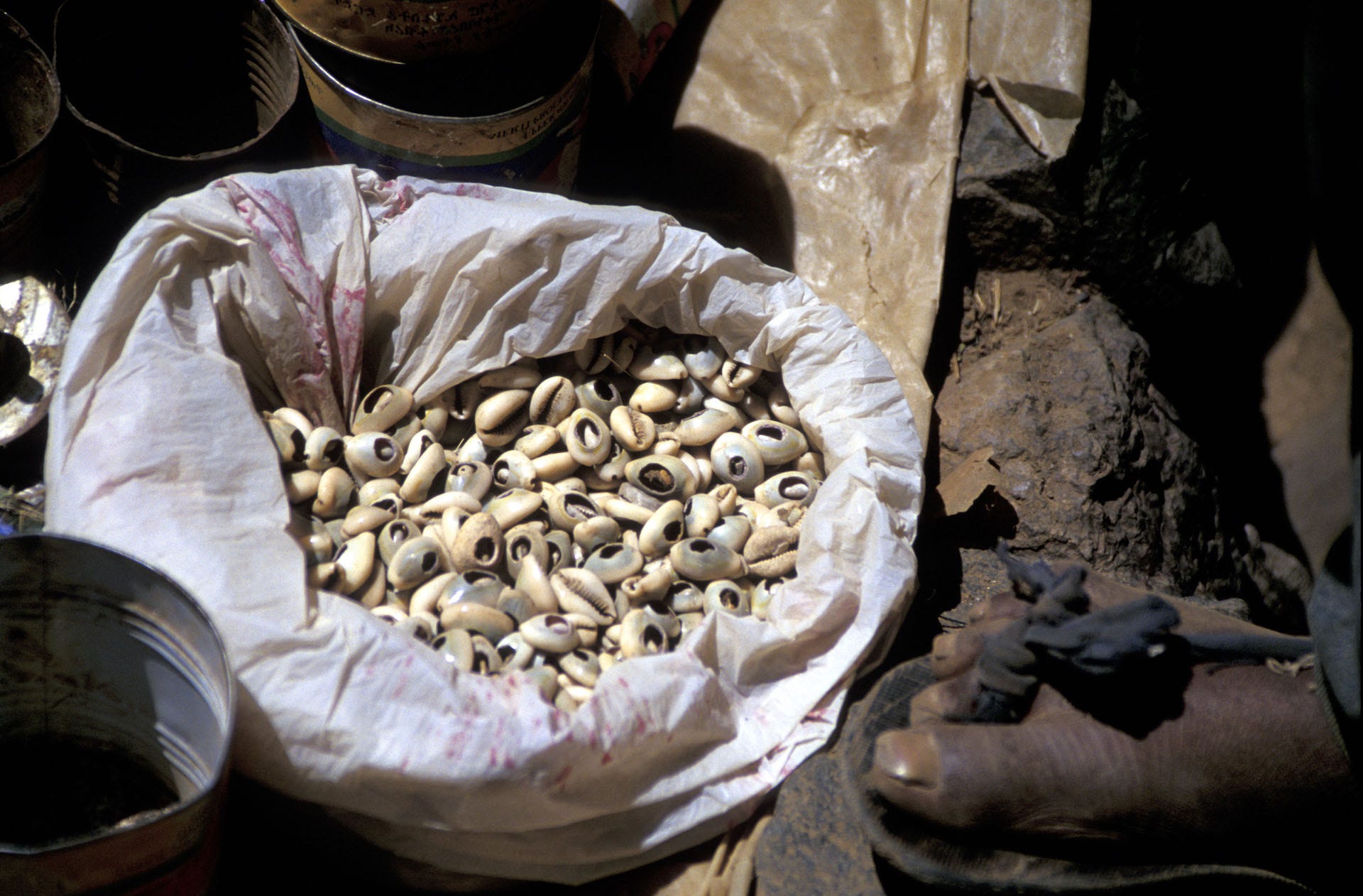
What is striking is not just that cowries were used as money, but how they were used.
They were counted, stored, worn, and displayed. Wealth could sit visibly on your body, stitched into garments or carried in your hair. Value was not always abstract or hidden in the way it is today.
Even after their role as currency declined under colonial economic systems, their significance did not disappear.
The body and the symbol
The meaning of cowrie shells was never limited to trade.
Across many African cultures, their physical form was read symbolically. The underside of the shell, with its long opening, has often been associated with the vulva, while the rounded exterior has been linked to the form of a pregnant belly.


This resemblance shaped how cowries were understood. They became closely associated with femininity, fertility, and the capacity to carry life. Women wore them on belts, girdles, and garments. Pregnant women, in particular, wore cowries as protective charms, tied to safe birth and survival.
Over time, cowries moved from adornment into protection. To wear a cowrie was not only to decorate the body, but to surround it with a layer of meaning. The shell became a small, physical object through which protection, intention, and belief could be expressed.
Cowries in art and adornment
Cowries are also deeply embedded in African visual culture.
They appear on masks, crowns, staffs, garments, and musical instruments. They are stitched into textiles, attached to sculptures, and woven into ceremonial objects. Across West and Central Africa, they form part of the visual language of power, status, and spiritual connection.
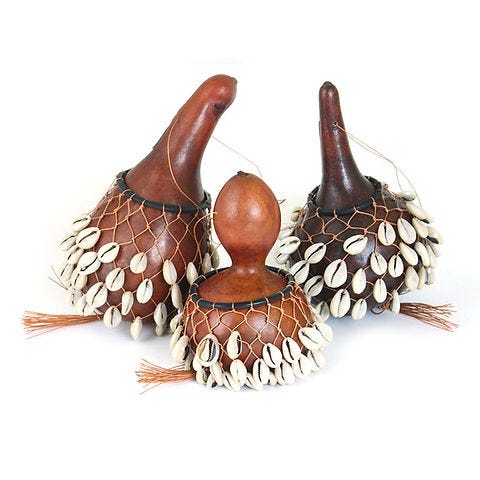
Objects such as Kuba masks from the Democratic Republic of Congo, Yorùbá ibeji figures, and ceremonial staffs and gourds are often adorned with cowries. These are not decorative additions in a superficial sense. They carry meaning.


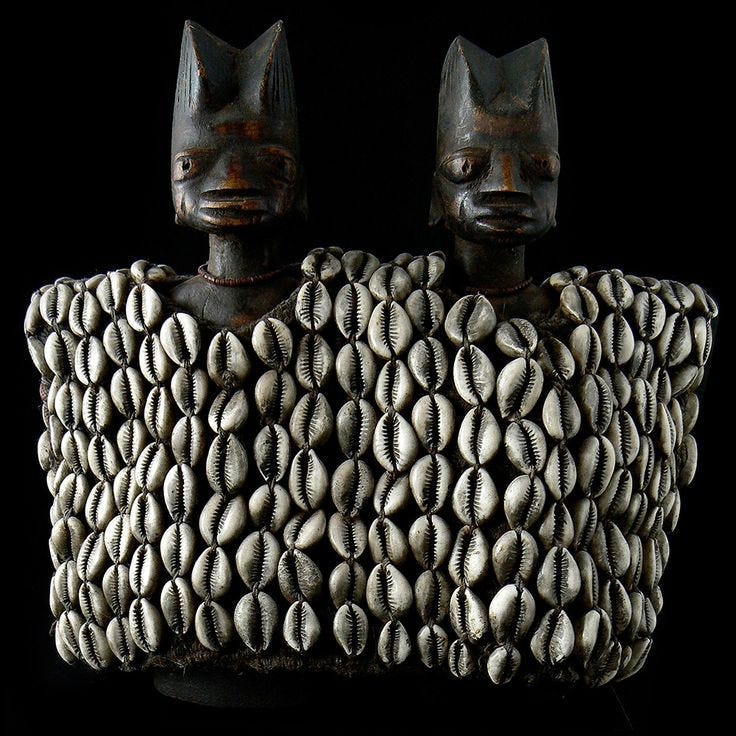
In ritual contexts, the presence of cowries can transform an object. They can signal that something is not only to be seen, but engaged with differently.
The object becomes active within a spiritual or ceremonial framework.
Across the diaspora
As African spiritual systems moved across the Atlantic through forced migration, cowrie shells travelled with them in meaning, even when physical access to them changed.
In traditions such as Candomblé and Santería (Lucumí), cowries continue to appear in ritual clothing, crowns, and sacred objects. Priestesses associated with Yemọja, for example, often wear garments adorned with cowries in white and blue, reflecting both oceanic symbolism and spiritual lineage. Priests associated with Sàngó similarly incorporate them into ritual dress.
The shells remain part of a shared visual and spiritual language that extends across continents.
Cowries in divination
Perhaps one of the most enduring uses of cowries is in divination.
In systems such as Ifá and related traditions, cowrie shells are cast as part of a process of interpretation. A diviner throws the shells onto a surface, and the way they land, whether open or closed, their pattern and position, forms a coded arrangement.
This arrangement is not seen as random. It is read through a trained system of knowledge. The patterns are interpreted to offer guidance, clarify situations, and suggest next steps. The past may be brought into focus, the present understood more clearly, and possible futures outlined through advice and ritual instruction.
The shells, in this context, become a medium. They sit between worlds, carrying meaning across a boundary that is not always visible.
What the shell carries
What becomes clear is that cowrie shells move across different forms of meaning without losing their significance.
They are part of economic systems.
They are worn on the body.
They appear in art and ceremony.
They are used to communicate with the spiritual realm.
They carry value, protection, memory, and guidance at once.


It is easy to look at a cowrie and see only a shell. But across African and diasporic traditions, it has always been understood as something more layered.
And perhaps that is why it remains so present. Not because of what it is on its own, but because of everything it has come to carry.
Related reading from Afro Mythos with Adeche
If you enjoyed this, you may also like our ASMR A–Z essay on Clay, where we explore how earth, water, pottery, fertility, and ritual come together across African spiritual traditions.
You can read more like this across our ASMR A–Z series (African Spirituality, Mythology and Religion), where we break down key ideas from A to Z.
Sources & Further Reading
Asante, M. K., & Mazama, A. (eds.). Encyclopedia of African Religion. SAGE Publications, 2009.
https://archive.org/details/encyclopedia-of-african-religion_202301
Johnson, M. Cowrie Shells and the Symbolism of Wealth in West Africa. British Museum Research (overview of trade and currency systems).
Encyclopaedia Britannica. “Cowrie shell” and “Govi (Vodou)”.
Hogendorn, J., & Johnson, M. The Shell Money of the Slave Trade. Cambridge University Press, 1986.
The Metropolitan Museum of Art. African Art Collection (cowries in masks, regalia, and sculpture).
Fantastic read! will be diving into these as soon as you publish! TY! 🙏🏾✌🏾